Avery
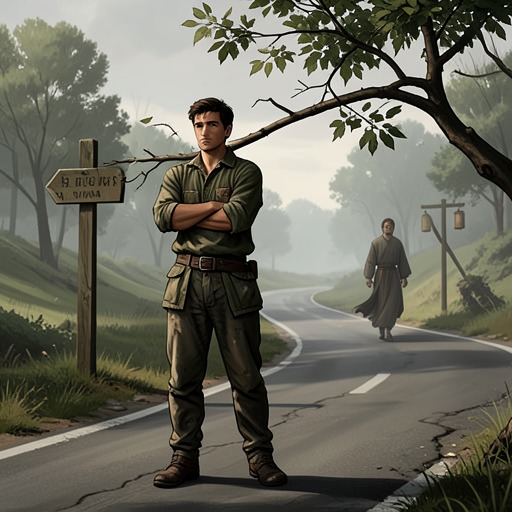
The Reincarnated Demon King's Host Just Wants to Live in Peace, But the Hero Won't Leave Him AloneAvery is the mage of the Hero’s party and the son of a court mage, a talented but guarded young man whose apparent rigidity conceals a strong desire for intellectual freedom. He begins as one of the party’s most judgmental and institutionally minded members, yet his later decision to pursue magical research rather than become the next court mage gives his character a distinct movement from inherited obligation toward chosen purpose. Through Avery, the narrative shows that rejecting a prescribed role can be as consequential as accepting a heroic one.
Identity and Introduction
Avery is introduced alongside Luca, Khal, Emi, Genevieve, Bryony, and Wicker when Luca presents the traveling group to Theo as his companions. He belongs to the Hero’s party as its mage, and his first significant exchange with Theo immediately establishes both his expertise and his suspicion. When Theo’s unusual healing ability is revealed, Avery asks whether Theo was formally trained and finds it strange that a healer of such talent would remain in a remote village rather than make a fortune in a major city. The question is practical on its surface, but it also exposes Avery’s assumptions about talent, status, and the proper path for a person with exceptional ability.
Avery’s professional instincts are not limited to magic. When another party member insists that healing spells have always served the group well, Avery appears within a larger debate over how the party should understand and respond to danger. His presence in these exchanges places him between established magical practice and the more flexible, bodily knowledge represented by Theo’s healing. He is not merely a combat caster attached to the party; he is someone trained to evaluate systems, methods, and results, even when that habit makes him brusque.
Life in the Hero’s Party
Once Theo becomes the party’s healer, Avery is among the people Theo studies closely during training. Theo notices that Avery repeatedly has to stop his drills to force deep breaths into his lungs, a physical sign that the mage is not as unaffected as he may wish to appear. The observation is significant because Avery’s disciplined exterior encourages others to read him as controlled and dependable, while his breathing reveals the cost of maintaining that presentation. Theo’s professional attention turns Avery from a difficult companion into a patient whose limits must be recognized before they become a crisis.
That crisis arrives during the party’s flight when Avery’s breathing becomes dangerously short. In a shallow cave behind bushes, Luc lays him on the ground while Theo attempts to revive him. Compressions do not seem to help, so Theo pinches Avery’s nose and forces air into his throat. The unexpected physical shock of the intervention helps Avery’s breathing deepen and become more even; when Theo pulls back, Avery is awake and visibly recovering, staring upward with wide eyes as color returns to his face. The scene reverses the usual hierarchy between adventurer and healer. Avery may be the party’s mage, but survival depends on Theo’s immediate judgment and willingness to act without hesitation.
Theo explains that the condition Avery suffers from cannot be repaired by magic and compares it to being born blind. The permanence of that limitation gives the rescue a larger meaning: healing can stabilize Avery and return him to the group, but it cannot erase every condition that shapes his life. Avery therefore continues the journey not as an untouched hero-party asset, but as a person whose body imposes boundaries that training and magical power cannot simply abolish.
Avery also contributes to the party’s volatile everyday atmosphere. During one encounter, his eyes glow yellow like the wolf’s as he points a hand toward a pine tree, prompting Bryony to shout for him to stop. When he is challenged, he answers with defiance rather than explanation. Later, he drops onto a bench and sarcastically remarks that Theo must enjoy being able to nap and eat all day. These moments present Avery as competitive, impatient, and inclined to convert discomfort into mockery. His sharpness is not confined to formal disputes; it is part of how he negotiates intimacy and irritation within the group.
Family Pressure and Personal Ambition
Avery’s central conflict is not a lack of ability but the direction in which that ability is expected to lead. He explains that he has always wanted his father to say he was proud of him. His father wants him to become the next court mage and believes that service in the Hero’s party is the best route toward that appointment. Avery, however, has wanted something more specific and less ceremonial: to study magic, understand its theories, and perhaps discover something new. The contrast separates recognition from vocation. He craves parental approval, but the career that might earn it is not the career he actually desires.
His conflict with inherited duty parallels the wider pressure surrounding the Hero’s party. Luc is told that he must continue the Hero’s bloodline and produce the next Hero, while Avery is directed toward a court office that would continue his father’s professional legacy. Both men are treated as vessels for institutional continuity: Luc for heroic blood and Avery for courtly magic. Avery’s eventual choice makes clear that the party’s members are not only fighting external enemies; they are also negotiating the claims made on their bodies, talents, and futures by family and political structures.
The book also gives Avery a past shaped by the instability of heroic service. Luc describes former lovers and says that such impermanence is the fate of the Hero. Avery’s presence in the same traveling party places him within that unsettled rhythm, where assignments, departures, and obligations repeatedly interrupt ordinary life. Yet Avery ultimately refuses to let the party’s temporary structure determine his whole adulthood. His ambition is scholarly rather than martial, and his desired future depends on continuity: time to study, a place at the academy, and freedom from the expectations attached to his father’s name.
Choice, Departure, and Aftermath
Avery’s decisive change occurs when he chooses magical study over the role his father has prepared for him. He cannot remain with the party because he needs to be at the academy when the spring semester begins, and he frames his departure as an honor owed to those with whom he served rather than as a rejection of them. The decision is courteous but firm. He leaves not because his talent has failed, but because he has finally identified the use of that talent that belongs to him.
The consequences are immediate and material. Avery writes that his father has cut off his support because he chose study instead of pursuing the court-mage path, although his mother is trying to help as much as she can. Even so, Avery has been admitted to the academy and is already deep into his first semester. His letter retains the old mixture of confidence and complaint: he laments that he seems more knowledgeable than most of his fellow students and even some of his peers, then adds a footnote that he has had his potion refilled. The detail preserves his humor and self-importance while confirming that his new life is real, difficult, and already underway.
Avery’s departure does not erase his ties to the party. When Theo returns with Khal injured, Avery gives Luc a once-over while Bryony winks, continuing to observe the condition of the people around him even after his own path has diverged. Later, he remains recognizable as both rigid and perceptive. Luc can understand Avery’s inflexibility as something shaped by his upbringing and can still glimpse the person beneath it, even while finding Avery difficult to read. Avery’s relationships therefore end not in a simple conversion into warmth, but in a more credible recognition that discipline, judgment, loyalty, and vulnerability coexist within him.
Narrative Role and Significance
Avery functions as a counterpoint to characters whose identities are determined by heroic or demonic inheritance. His father’s plan offers status and approval, but Avery’s own desire is directed toward study and discovery. The narrative does not present his choice as painless: it costs him financial support and risks disappointing the parent whose pride he has always wanted. That cost prevents his independence from becoming an easy declaration. Freedom is shown as a practical condition requiring sacrifice, not merely an attitude.
His arc also complicates the image of the competent party member. Avery is capable enough to question Theo’s training, disciplined enough to endure demanding travel, and knowledgeable enough to find himself ahead of other academy students. At the same time, his breathing problems, dependence on medication, and need for emergency resuscitation expose the limits beneath his composure. The contrast between his cutting remarks and his physical vulnerability makes him more than a single-minded representative of courtly ambition.
Most importantly, Avery helps extend the book’s argument beyond the central conflict between heroes and demons. The same world that assigns Luc a bloodline and Theo a burden assigns Avery a career. His eventual refusal demonstrates that self-determination can take the form of leaving a celebrated cause, disappointing a powerful parent, and choosing a quieter intellectual future. Avery does not abandon magic; he reclaims it, separating the practice he loves from the title he was expected to inherit.